Brick Break: The Ultimate Guide to the Classic Game and Pokémon Move
What Is Brick Break?
Brick break is one of those search terms that means two very different things depending on who’s typing it. For gamers nostalgic for arcade cabinets, brick break refers to the classic paddle-and-ball game often called Brick Breaker or Atari Breakout. You control a paddle, bounce a ball upward, and smash through a wall of bricks until none remain.
For Pokémon trainers, brick break means something else entirely. It’s a Fighting-type move with 75 base power that doesn’t just deal damage — it shatters protective barriers like Reflect and Light Screen before the hit lands. Both meanings share the same destructive, satisfying theme: breaking through something solid to reach a goal.
Brick Break as a Classic Arcade Game
The arcade version of brick break has roots going back decades, evolving from Atari’s original Breakout into countless mobile and browser adaptations. The premise stays simple across every version: a paddle at the bottom of the screen, a bouncing ball, and rows of colorful bricks waiting to be destroyed. It’s easy to learn but genuinely hard to master.
What makes brick break endure is its blend of reflexes and strategy. Players must track the ball’s trajectory, angle their paddle precisely, and plan several bounces ahead. Many modern versions add power-ups, multi-ball modes, and increasingly complex brick patterns, keeping the core brick break formula fresh for new generations of casual gamers on phones, tablets, and browsers alike.
How to Play Brick Break: Rules and Controls
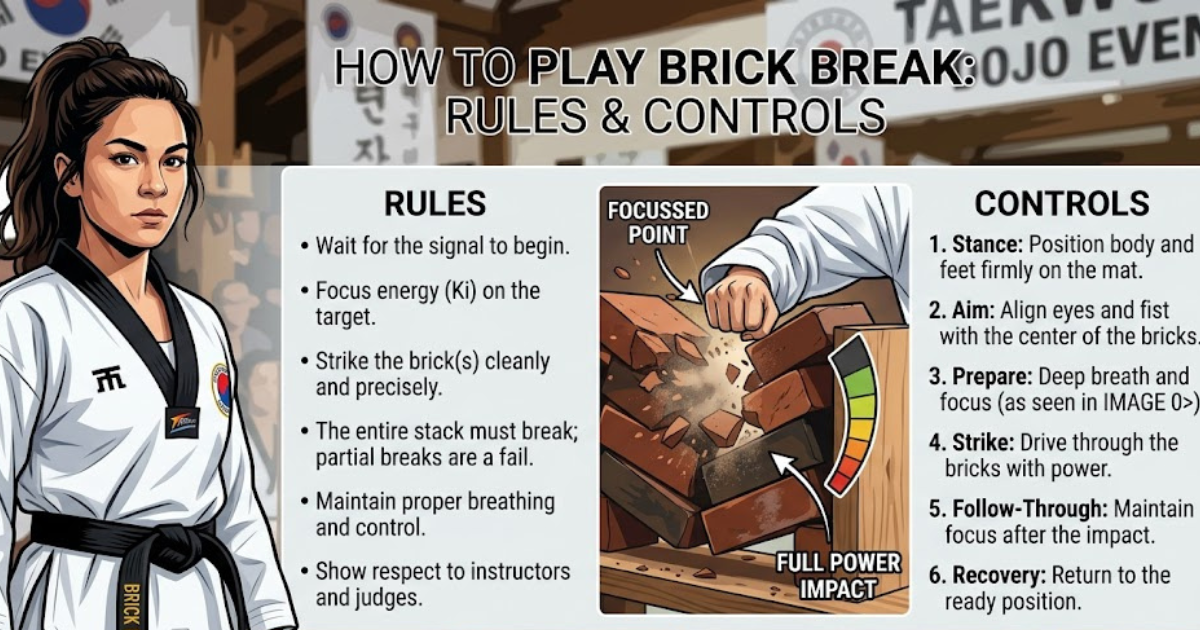
Playing brick break starts with understanding the objective: clear every brick on the screen without letting the ball fall past your paddle. You move the paddle left and right using arrow keys, a mouse, or touch controls depending on the platform. The ball launches upward, bounces off walls and bricks, and returns downward toward your paddle.
Losing a life happens the moment the ball slips past the paddle and off the bottom of the screen. Most brick break games give you three lives before ending the round, so precision matters. Successfully clearing an entire level of bricks usually advances you to a tougher stage with faster ball speed, smaller paddles, or trickier brick layouts.
Scoring in brick break typically rewards speed and accuracy, with bonus points for consecutive hits, rare colored bricks, or collected power-ups. Some versions include indestructible bricks that require multiple hits or bricks that must be avoided entirely. Understanding these rule variations before you start playing helps you set realistic expectations and enjoy the game’s escalating challenge.
Tips and Strategies to Master Brick Break
Mastering brick break requires more than fast reflexes; it demands anticipation. Watch the ball’s angle rather than its current position, since where it’s heading matters more than where it is. Hitting the ball with the edge of your paddle sends it off at a sharper angle, which is useful for reaching bricks tucked into corners that a straight shot would miss.
Patience also pays off in brick break. Rushing to clear bricks often causes players to lose control of the ball’s trajectory, leading to unnecessary lost lives. Instead, focus on controlled, deliberate paddle movements and prioritize clearing bricks that open up new angles. Power-ups like multi-ball or a wider paddle should be grabbed strategically, not just whenever they appear on screen.
Practicing on easier brick break levels before jumping into harder difficulty settings builds muscle memory for paddle control. Many experienced players recommend keeping the paddle centered by default, only shifting decisively once the ball’s direction is clear. This reduces wasted movement and keeps you ready to react to unpredictable ricochets off the walls and bricks.
Brick Break as a Pokémon Move
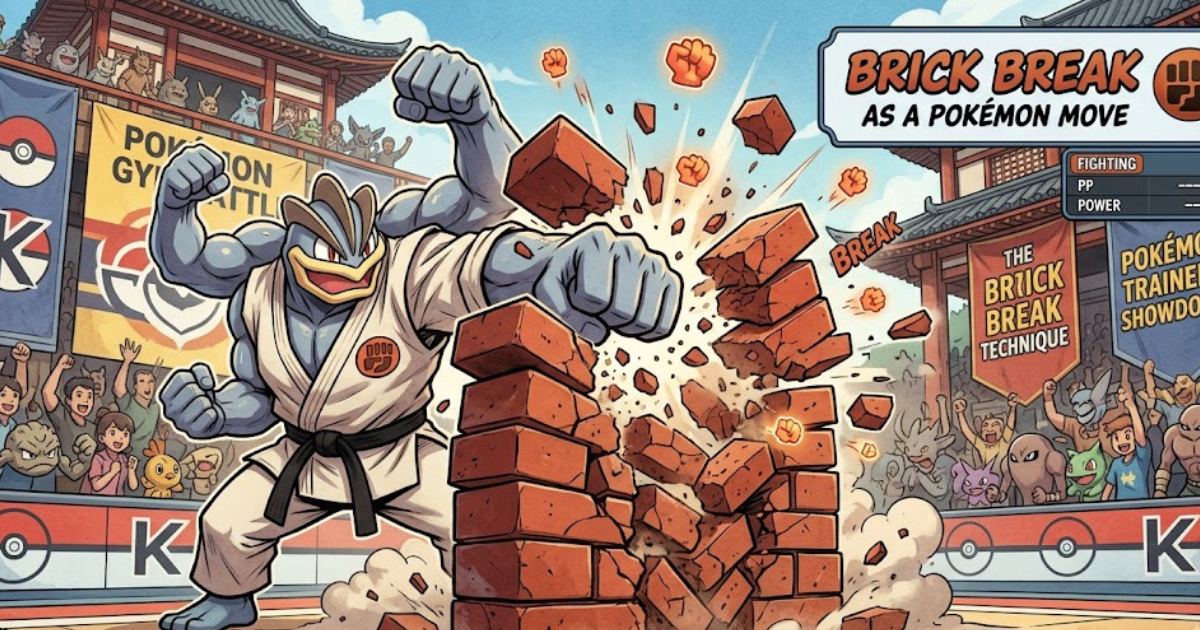
Switching from arcades to Pokémon battles, brick break serves a very specific tactical purpose. As a Fighting-type move with 75 base power and 100% accuracy, it deals respectable damage on its own. Its real value, though, comes from its unique secondary effect: brick break destroys the opposing side’s Reflect and Light Screen before calculating damage.
This makes brick break a powerful counter against stall or defensive teams that rely on screens to reduce incoming damage. Any Pokémon that learns brick break — including many Fighting-types and a surprising range of other species through TMs — gains a reliable way to punish teams leaning heavily on Reflect and Light Screen setups, turning a defensive strategy into a liability.
Brick Break Move Stats and Battle Strategy
Competitively, brick break’s 75 base power places it in a moderate damage tier, notably weaker than signature Fighting-type moves like Close Combat or Superpower. However, its screen-breaking effect gives it situational value that raw power numbers don’t capture. Trainers often carry brick break specifically to counter teams built around defensive walls and dual-screen support strategies.
Timing matters when using brick break effectively. Since it removes screens immediately before dealing damage, using it on the same turn screens go up can prevent your team from taking reduced damage that turn. Pairing a Pokémon that knows brick break with sweepers on your team creates strong synergy, clearing defensive obstacles so your heavier hitters can finish the job.
Brick Break: Game or Move — Which One Are You Looking For?
Given how differently these two meanings play out, it helps to clarify which brick break you’re after. If you want quick, casual entertainment with satisfying visual feedback, the arcade brick break game delivers that in short, replayable sessions on almost any device, requiring no downloads for most browser versions and no prior gaming experience.
If you’re building a competitive Pokémon team or trying to counter screen-heavy strategies, the brick break move is what you need to research further. Understanding its power, typing, and screen-breaking effect helps you decide which Pokémon should carry it and when to deploy it during a battle for maximum strategic advantage.
Conclusion
Brick break proves that one phrase can hold two completely different kinds of fun. Whether you’re bouncing a ball to clear colorful bricks in a browser game or using a Fighting-type move to shatter Reflect and Light Screen in a Pokémon battle, the core idea stays the same: break through the barrier standing between you and victory. Both versions of brick break reward practice, strategy, and a bit of well-timed precision, making them worth exploring no matter which one brought you here.